The Purpose Tournament
To work more effectively, an organization needs clarity about its purpose — ideally at the level of the entire organization, at the team level, and at the individual level. Ideally, these layers of meaning overlap or at least align well with each other.
Guiding questions to help a team find its shared (team) purpose are:
- What does the world need us for (as a team)?
- What drives me (individually)? What gets me out of bed every morning?
Our method for getting closer to answering the “why” in a short amount of time is the Purpose Tournament. It consists of five steps:
In the first step, the group creates a mind map of all stakeholders for whom the team believes it creates value. This includes people who interact with the team, other teams, but also external entities like society or the planet. The question participants are trying to answer is: For whom are we creating value?
Participants write down every stakeholder that comes to mind on Post-its. There is no right or wrong, no good or bad. The goal is to generate volume — to identify as many actors as possible. Duplicates are even welcome. It’s crucial that each Post-it contains only one idea so that clusters can be formed later. The Post-its are placed on the wall immediately. Often, they spark inspiration in other participants and trigger even more ideas.
At this point, it’s clear who the team creates value for — but not yet what that value actually is. The stakeholders identified in the previous step serve as a reference to determine this. In this step, participants write on Post-its what value the team creates for others and stick those on the wall as well. Again, the first notes are placed on the wall while other participants are still writing.
The facilitator clusters the identified aspects together with the group. Similar types of value are grouped next to each other. Afterwards, each cluster receives an overarching label that represents all the subpoints within that cluster. The label should be an abstract term such as reliability, empowerment, speed, or warmth. Ideally, the group ends up identifying and labeling five to seven clusters that capture the value they bring into the world. These terms are meant as orientation only. A string of seven abstract terms in a row does not make a good purpose!
In this step, each participant first writes down, individually, what the overarching purpose could be. The sentences can still be long and clunky, since they will be discarded as the exercise progresses. What emerges are small, imperfect purpose prototypes that summarize everything the team developed in the first two steps.
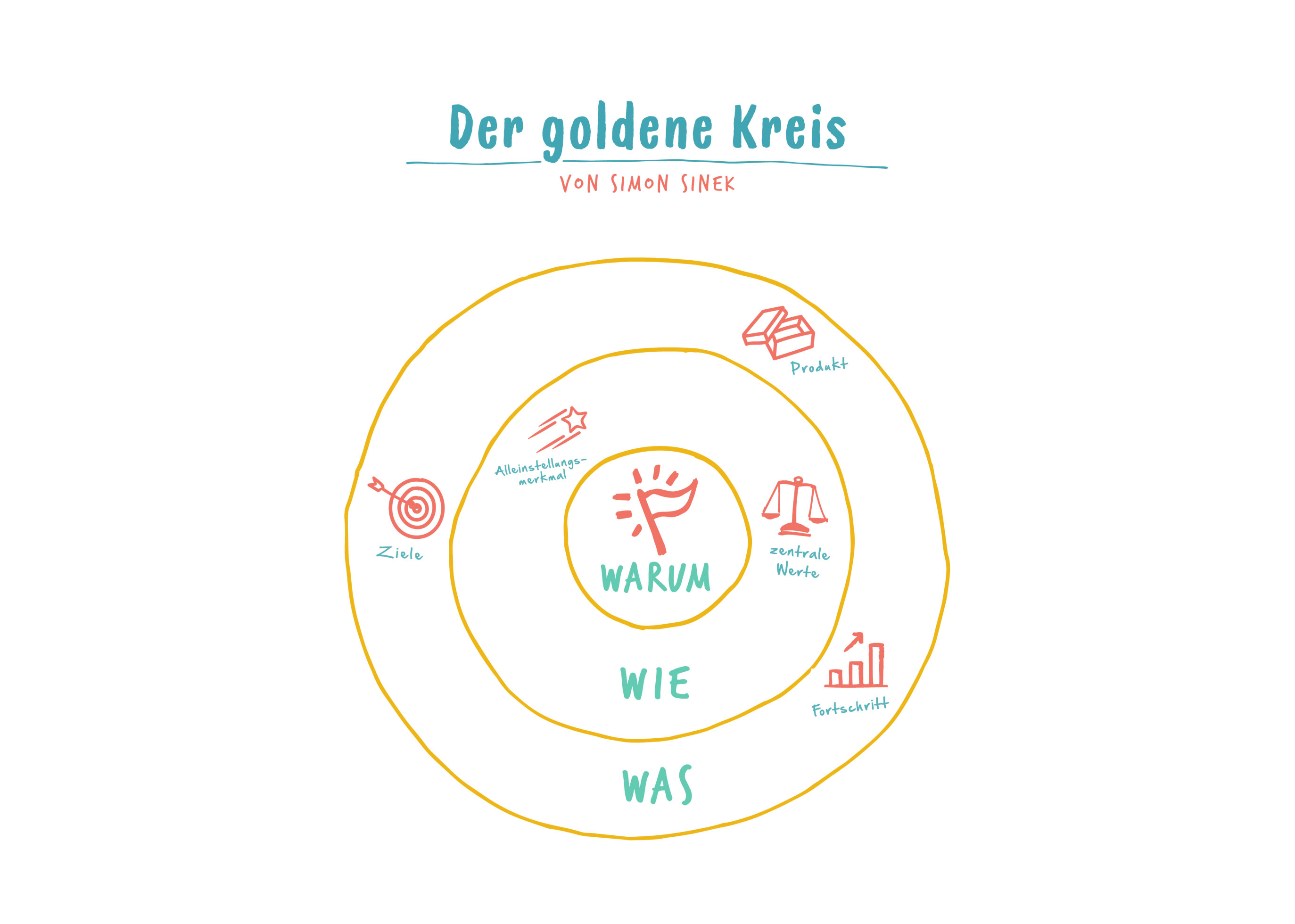
To generate wording, it helps to repeatedly ask yourself: “Why are we needed?” and start the answer with “We …”. It is often also useful to compare the first prototypes with Simon Sinek’s Golden Circle and ask which parts of the sentence describe the what, which describe the how, and which describe the why.
Then the actual tournament begins.
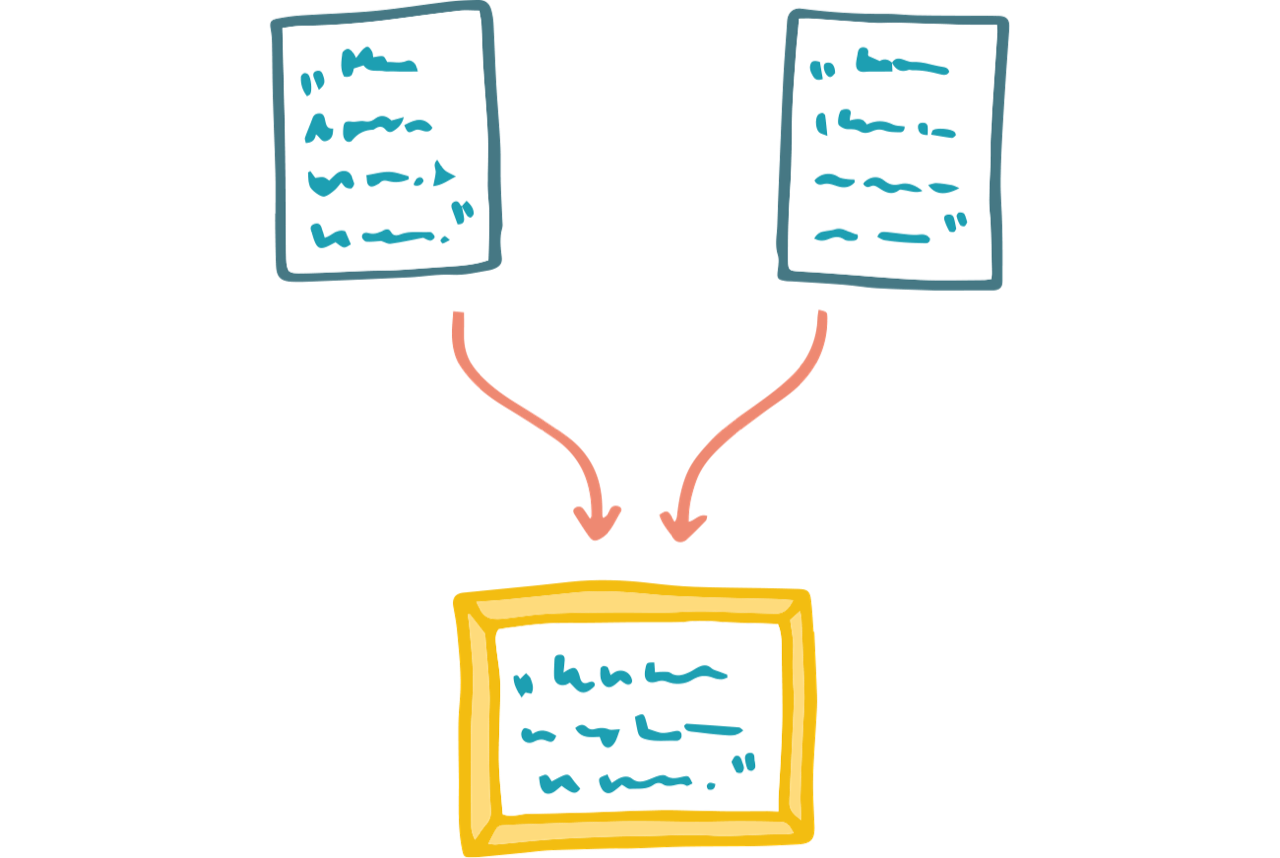
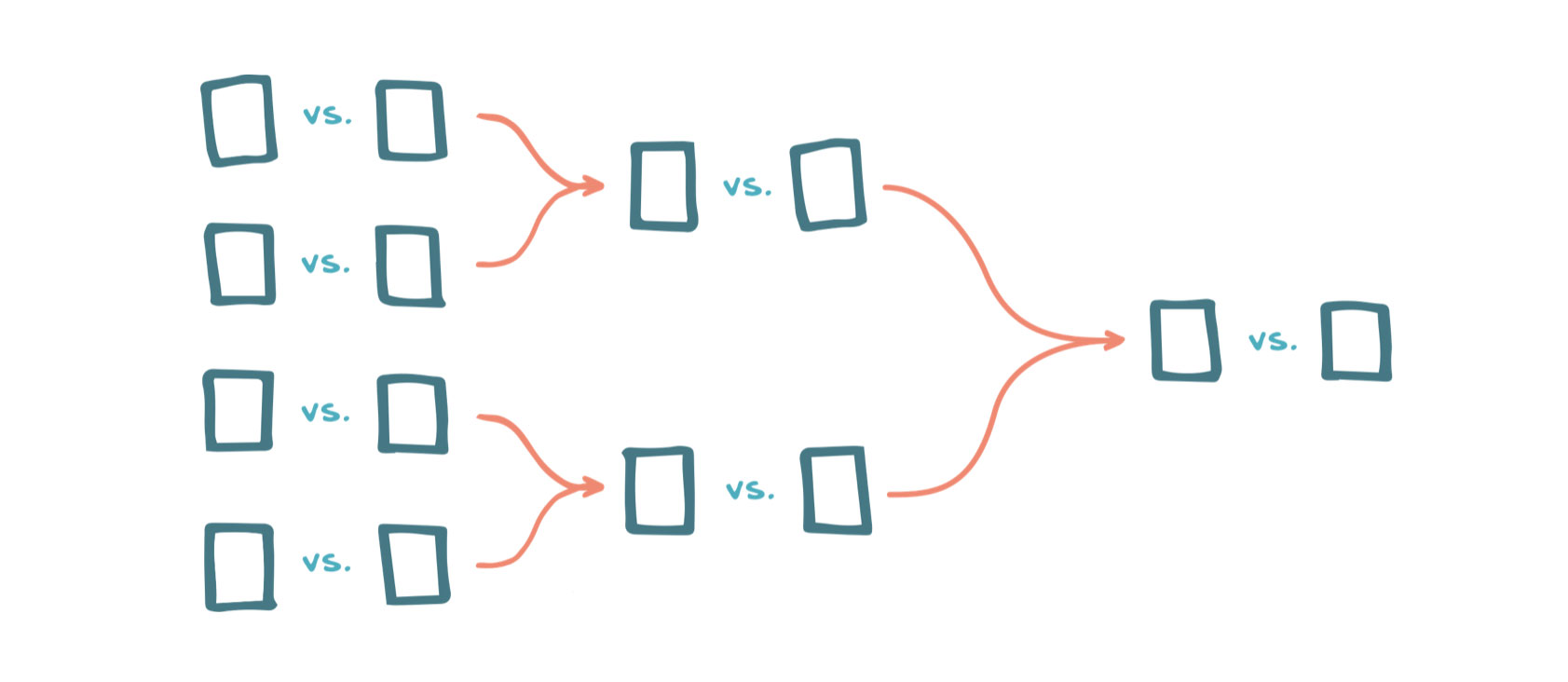
Two participants pair up and have fifteen minutes to develop a new purpose formulation together. The goal is not to agree on one of the existing drafts, but to co-create a new one that both are initially happy with. Here too, it can be helpful to refine the prototype using the Golden Circle. Once the new sentence is finalized, the pair chooses one representative to move on to the next round. The other person stays on as a spectator — they can still contribute ideas, but they can no longer make decisions.
The chosen representative then faces another representative in the next round and repeats the process. In other words: both participants agree on a new formulation based on their drafts, and then select one person to advance to the next round.
In the final round of the tournament, only two versions remain. These are integrated as well. The result of the round is presented to the group and reviewed together. By this point, it should be much clearer what the why is and how it connects to the how and the what. Any objections from the group are taken on board and, where possible, resolved together.
Importantly: the purpose developed here is not final. The goal of the exercise is to create a prototype that the group feels comfortable with for the time being. This is part of the new mindset: if something is good and safe enough to test, it is kept — at least for now, until someone comes up with something even better.



New things are constantly emerging at TheDive.
With our newsletter, you’ll stay up to date.

New things are constantly emerging at TheDive.
With our newsletter, you’ll stay up to date.