Our Sync Meeting:
Meetings. Over 20 hours — that’s how much time we spend in them on average per week. Yet, compared to the time invested, we often remain alarmingly unproductive.
And yet meetings are a crucial lever for improving teamwork. For us, they’re effective when, for example, all participants know their purpose and when they leave the team energized for the work ahead.
A great example of this is the Sync Meeting. This meeting format is designed for the team to synchronize, exchange updates on current projects, or request operational tasks. It leaves little room for long discussions and difficult decisions — those belong in other meetings.
¹ The Sync Meeting is inspired by the Tactical Meeting from Holacracy, which we have experienced as a very productive meeting format in many contexts.

With respect to the 4 Spaces, “Sync” belongs in the operational space — meaning it concerns work within your roles. When done correctly and consistently, it becomes the fastest and most efficient meeting in the world.
To ensure this flow, two roles are necessary. First, you need a facilitator — someone who leads the meeting and moderates it competently, or as we like to say: someone who “holds the space.” The second standard role is the transparency master. This person captures the formal outcomes of the Sync Meeting and communicates them to the relevant parties (for example, next steps and projects).
What do you need?
The central question used in Sync is: What do you need? It serves to process tensions in tension-based work and ideally resolve them. In classic Sync mode, there are four possible answers to this question:
- I want to share information
- I need information
- I want to request one or more ToDos
- I want to request a project
-
This way, we proactively address tensions, create clarity about next steps — and increase the likelihood that the people holding the tensions get what they need to resolve them in a meaningful way.
Team members share how they are doing and what is currently occupying their attention. In teams that have been working together for a while, it can be helpful to vary the check-in questions.
The checklist creates transparency around all recurring tasks that come up within the team (for example, “all invoices are paid,” “the weekly newsletter is out,” etc.). The principle is used in aviation, for example: there, accident rates were drastically reduced by having pilots go through their checklist before takeoff.
This item is meant to ensure that all team members are informed about relevant data, numbers, and facts. These metrics can vary widely between teams — from the number of products sold to LinkedIn reach, for example.
Here, all team members share new and relevant updates with the team. The project list already created serves as the basis for this. Very important: this is not about reporting the full status of every project, but about what is truly new and relevant to the group. It’s even desirable if someone says, “No relevant update.” We assume that the person has been doing other meaningful work.
The open agenda is used to work through all the tensions that have come up during the earlier parts of the meeting. Steps 2 through 4 are meant to make information and tensions visible; the open agenda is now used to address all current tensions. In this step, tensions are collected and added to the agenda. In our teams, the open agenda is typically kept open for the entire week between Sync meetings so that any emerging tensions can be captured before the next meeting.
In this step, we come to the core of the Sync Meeting: working through the tensions. The goal is always for the person holding the tension to get what they need to resolve it. The guiding questions are: “What do you need?” and “Do you have what you need?” All next steps are recorded. The agenda remains open in case additional tensions arise.
During the check-out, participants briefly share anything they want to say in order to leave the meeting feeling good. Here too, the check-out questions can be varied as needed.
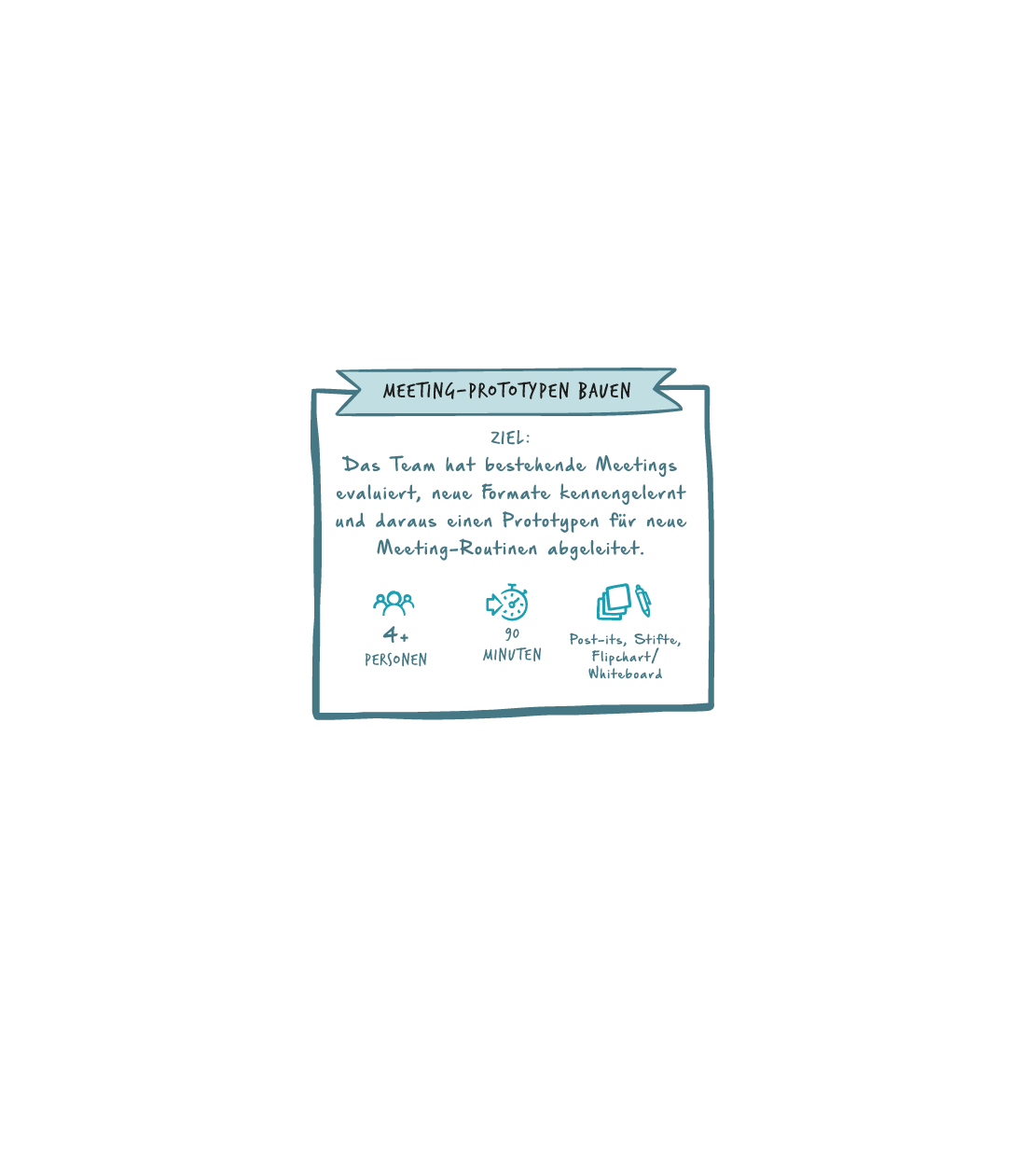
What does your team need?
Team — to ensure transparency and regularly define next steps?
What can be adopted from existing meetings?
Make it very concrete:
What goes into our checklist? What key metrics do we need? What is the meeting frequency? Who participates? Who sends the invite? Who facilitates? Who records the outcomes, and in what format?
The groups present their drafts to each other and integrate them. In the end, participants agree on a version they feel comfortable with for now — knowing that the meeting structure can be changed and further developed at any time if someone raises a tension.
Here you’ll find some supporting handouts for your first Sync meetings.

More Meeting Formats you can find in the Loop Book
In our book on the Loop Approach, you’ll find many more insights on meetings, teams, and other organizational topics across 235 lovingly designed pages.



New things are constantly emerging at TheDive.
With our newsletter, you’ll stay up to date.

New things are constantly emerging at TheDive.
With our newsletter, you’ll stay up to date.